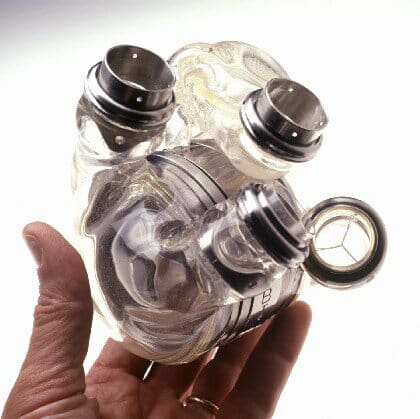
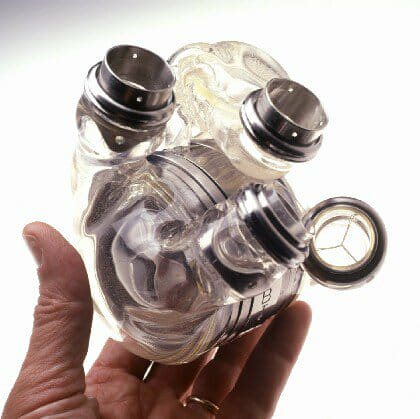
As you are not immortal and can't possibly survive for eternity, looking at people around you, healthy, fit people suddenly passing away due to heart attacks: you can't stop wondering: what if you end up getting a major heart attack? What's the chance of survival? Would you be one of those saying goodbye to this world way too soon? If you're hospitalized at the right time, you may have a chance of survival of above 90 percent. However, the stars don't always align and you end up getting a cardiac arrest or fall in a situation where there's no other treatments working for you and all you need is a heart transplant. However, finding a heart donor is not easy. So the only angel in disguise that can save you is an artificial heart. There are people out there who have been living with an artificial heart for 1374 days (nearly 4 years). Who knows, maybe in the future, people can survive with artificial times for eras?
Now what's the secret behind an artificial heart that can keep a person alive?
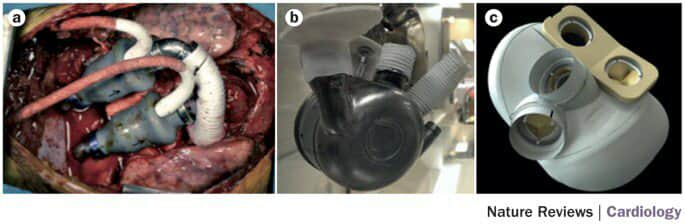
The artificial heart has ventricles made from polyurethane, which is a widely used artificial material that is both durable and flexible. Once implanted inside the chest, a machine called a driver controls the pump from outside the body. The driver is essentially a portable air compressor that pushes air through two tubes connecting directly to the heart. The tubes extend through the skin near the stomach, allowing the pump and driver to work simultaneously to allow continuous blood flow to and from the heart. Thus, it holds the capability to effectively replace the role of heart. The best part? They are portable and can be charged anywhere, whether it's your home, your car or your workplace!
Batteries in the past vs present
Did you know that a few decades ago, nuclear-powered pacemakers were implanted in patients to reduce the need for repeated surgeries to replace batteries? These early devices contained a small pellet of plutonium-238, a radioactive isotope that released heat as it decayed. This heat was then converted into electricity to power the pacemaker’s circuit system. However the radioactive materials imposed health risks to the patient, due to which people discontinued from using them. Luckily, engineers came up with modern, long-lasting lithium batteries with the ability to provide service for 10-15 years. These batteries are not only safer, but also makes the replacement procedure much quicker.
The heart-lung bypass machine
During the implantation of an artificial heart, surgeons rely on a heart-lung bypass machine, which temporarily takes over the functions of both the heart and the lungs. While the surgeon replaces the heart, a mechanical pump ensures oxygen-rich blood is circulating around the body, whilst an artificial lung within the machine removes carbon dioxide, adding oxygen to the blood. Therefore, this allows the surgeon to safely detach the original heart and implant the artificial heart, without interrupting the body's circulation.
Why is everyone not using it?
Despite being promising, the artificial heart did not become a universal solution yet. It may not be well-fitted, instead of doing benefit it can result in uncontrollable bleeding and infection. With time, the parts can get worn out and the electric motor can even fail. Moreover, the blood flow may not be as smooth, resulting in blood clots that will potentially lead to strokes.
A glimpse into tomorrow
Yet, this is just the beginning of the technological revolution, and we are on our way to crafting smaller, more efficient and longer-lasting hearts that will definitely be the permanent alternatives to real hearts. According to recent research, robotic hearts are being developed that mimics the natural motion of our heart, there will also be wireless energy transfer methods to prevent the cumbersome drivers and use of biocompatible materials can definitely reduce blood clots and infection. In a world where life hangs by a thread, an artificial heart can provide the extraordinary promise of gifting us an extended, thriving life.
Comments