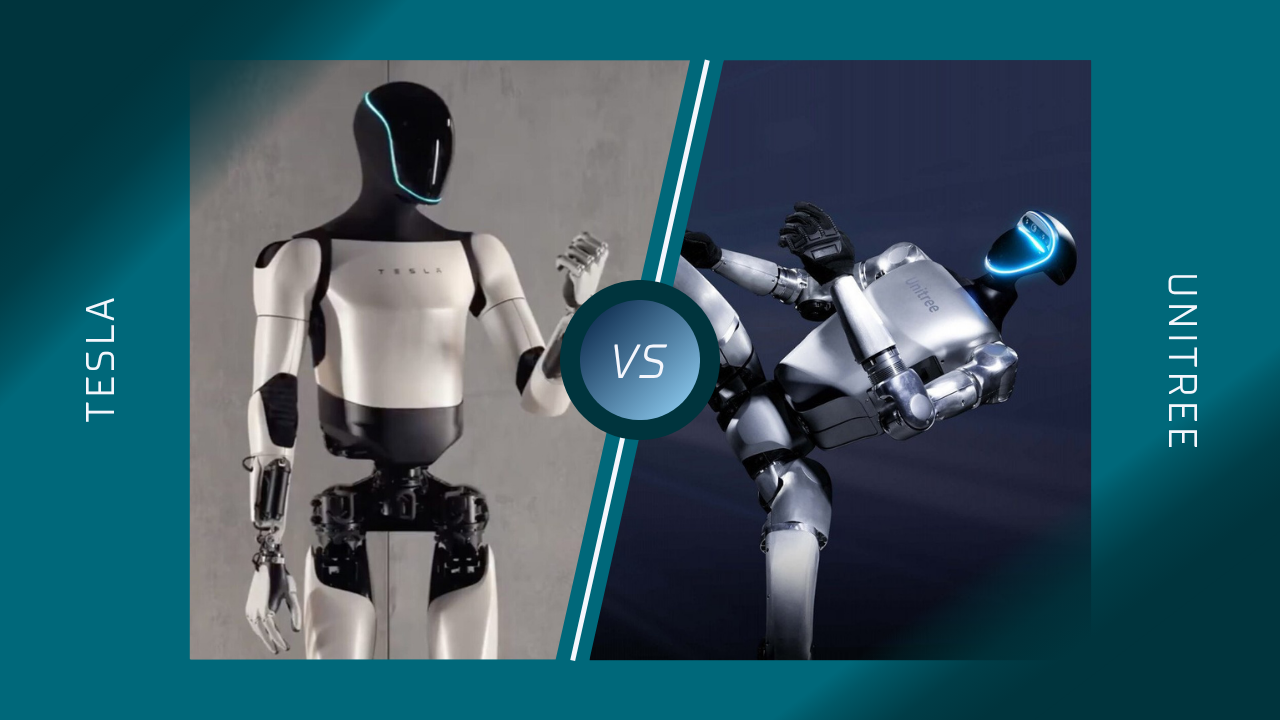
Find out which is better yourself!
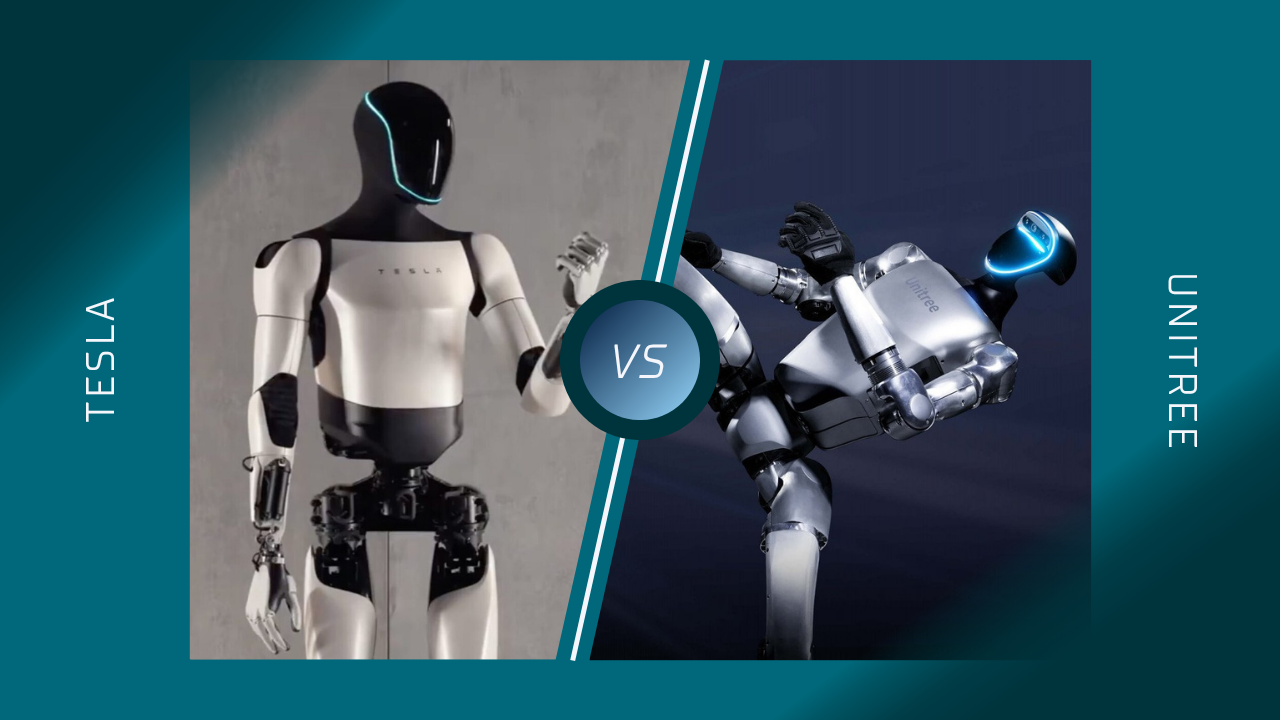
With rapid industrialization, innovation and development of machines that can do almost any work, the world is progressing towards creating beings named robots that are soon thought to replace humans. Rumours of a world conquered by robots or battles between humans and robots are still prevalent. Yet, as with every new creation and success comes competition, the real battle brewing right now is between two giants from two superpower nations: Tesla Optimus from the United States and Unitree G1 from China.
For now, let us stick to the comparison that I'm referring to as war, until one day we get to see the real battle between these two groups!
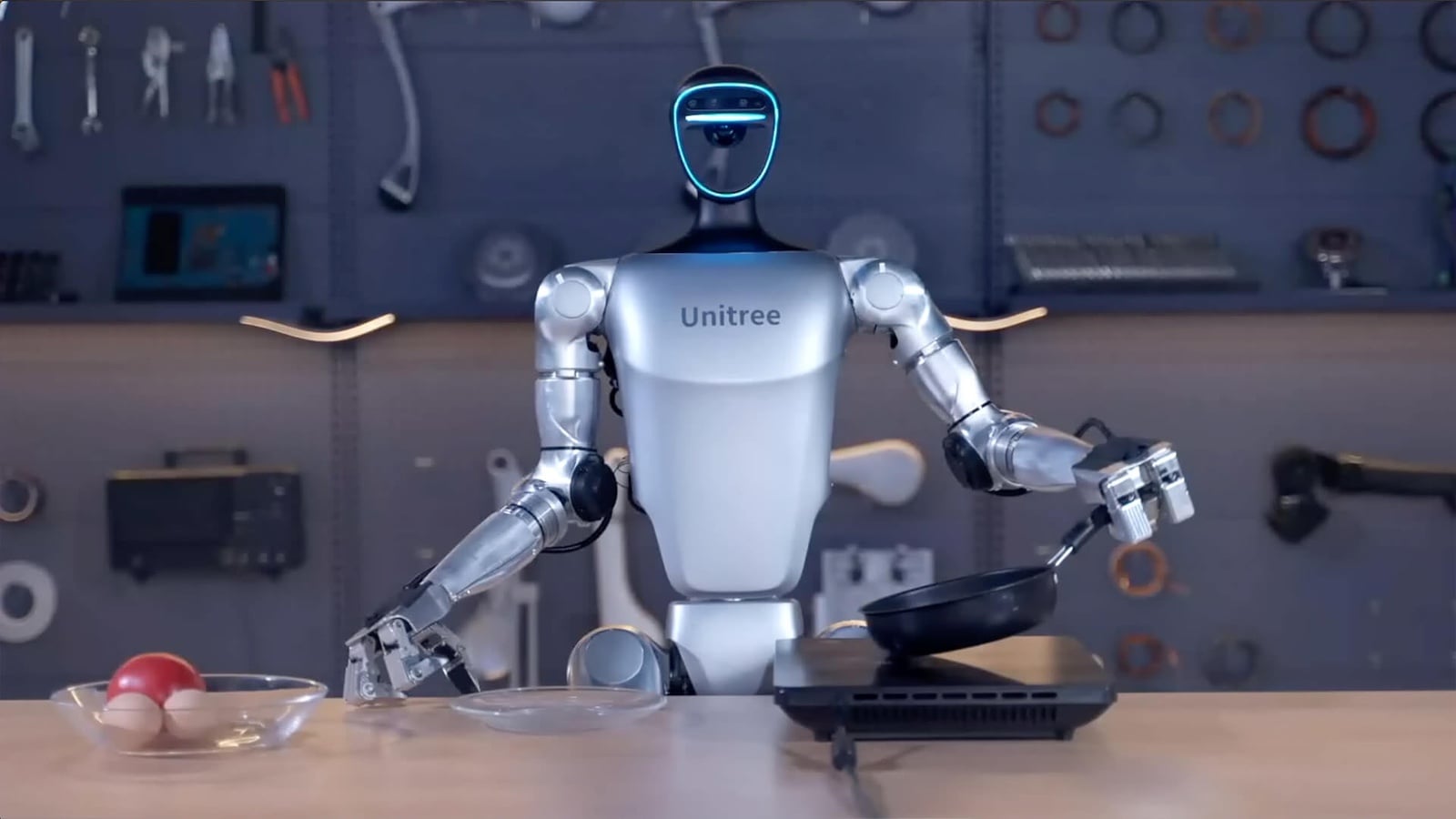
One of Unitree's humanoid robots
Credit: Unitree Robotics Official Site
Unitree G1 may be considered to be more superior in terms of its limb articulation; possessing 43 degrees of freedom, it has the capacity to produce smoother and more precise movements than Tesla Optimus. Although Unitree G1 consists of three fingers only, its ability to perform a range of activities from simple day to day tasks like flipping your breakfast egg, or opening your water bottle to complex dynamic movements like squats and climbing steel stairs is remarkable!
And when it gets pushed? G1 doesn’t just fall.. IT REBOUNDS!
G1 stabilizes itself instantly, like a boxer snapping back after a punch. If you’ve seen the recent viral Unitree robot boxing competition, you already know the energy. It genuinely looked like a scene from “Real Steel”—except happening in real life. Of course, it's not perfect yet; sometimes the one doing the kicking ends up slipping first, but hey, this is just the first chapter of what’s coming!
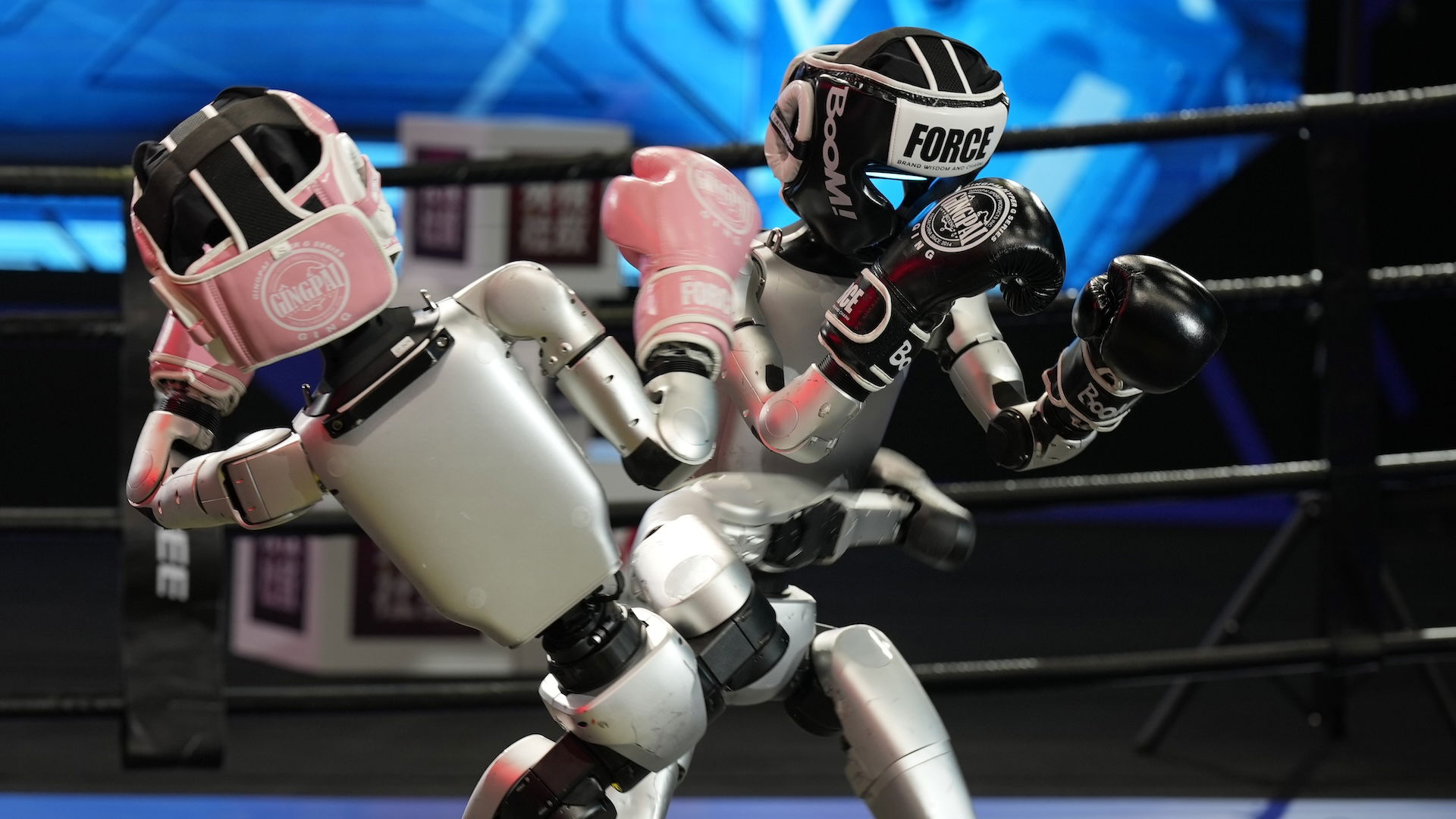
A snap from World's First Robot Boxing Competition (May 2025)
Credit: CMG
With its insane balance, instant self-recovery and freakishly precise movements, this 1.27m-tall dynamo feels packs agility and reliability into a surprisingly compact body. Having the ability to reach upto 12km/h, G1 moves with the confidence of a robot built for real world chaos. However, it requires an external control, meaning a human operator guides most of its decisions in real time.
This was only one half of the story as Tesla Optimus steps in with strengths that challenge Unitree from a completely different angle. Now let’s have a look at the other side of the world and see what makes Optimus stack up!
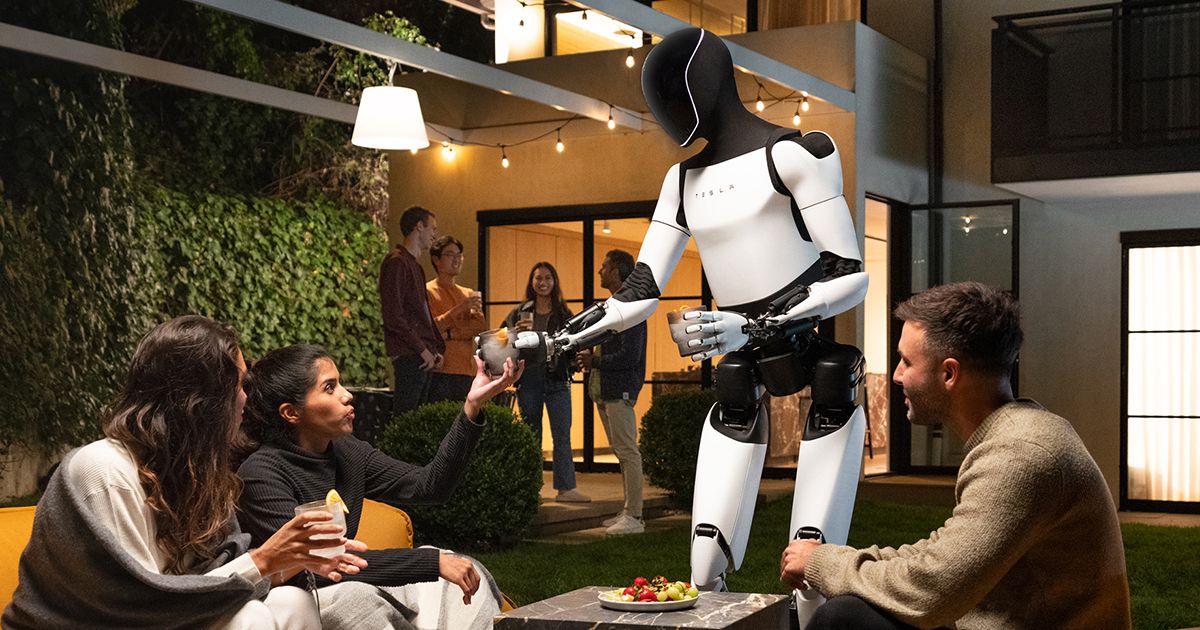
Tesla Optimus serving drinks to a family
Credit: Tesla
Tesla Optimus, standing about 1.73m tall, is built for industrial strength and smart operational control, not gymnastics. It is trained in transporting materials, along with doing construction and mining tasks that can be hazardous for humans to work at. With its advanced hands and tactile sensors on its fingertips, it can handle things with near-human precision!
Unlike Unitree, Tesla Optimus is slower, reaching a maximum speed of 8 km/h, but it compensates with its autonomous decision-making ability. Optimus doesn’t rely on any constant external control like G1; its AI allows it to evaluate tasks, make adjustments, and take real-time decisions within its environment!
Unitree G1 versus Tesla Optimus: same arena, completely different strategies!
Although apparently both of them look like cutting-edge humanoid robots, the way each of them is approaching the future of robotics is night and day. While Tesla's goal to automate its own production lines before selling robots externally, ensuring real-world testing and keeping failures private, Unitree takes a broader approach. Unitree G1, priced from $16k, is sold to anyone who can use it, from laboratories to logistics farms. The more robots they deploy, the more feedback they collect, and the faster they iterate - the same strategy that helped China dominate the drone manufacturing industry a decade ago. In contrast, Tesla follows a more measured path and with its massive AI infrastructure, Dojo, and data pipelines, Optimus, which may be priced around 25k$ when commercially released, has the potential to rewrite the whole robotics market in the future.
Tesla is chasing intelligence that moves elegantly. Unitree is chasing reliability that refuses to fall. While Unitree seems more ready for real-world deployment, the combination of Tesla’s scale and AI could set a new standard for what robots can achieve. So, which one do you think is your pick? Comment down below!
Comments